Gary,
The linear expansion factor of any given material stays constant regardless of cross section. That said there are a few tricks to ease the effect one of them is using gentle curves, instead of long straight tangents.
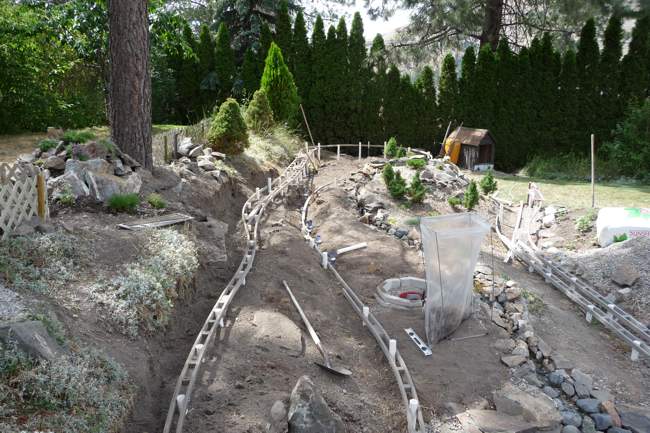
Apart from that, leave enough gap in the joiners, don't solder the rail, but have a bus to feed from for every section of track. I don't know how flexible the Atlas C55 track is, but if the rail can move within the tie sections that is a good thing. Heat buckling happens when there is no allowance to expand in a linear fashion.
The layout room in my former life was over the garage, the roof was shaped like a barn roof - very nice, the floor print was clear from one side to the other with no support columns. The temp fluctuated from +2ºC in the winter to +33ºC in the summer since the wood furnace would only get used when operating sessions were scheduled. It was a bit of a problem. ;) ;)
Finally I bought an electric stove from a friend - he went larger and fancier and all that jazz! Keeping the temp at a min of 12ºC sure helped the situation. But no way was I going to spring for air conditioning, let them sweat. It gets really hot at track level in the Swiss mountains. ;) :)
By far the trickiest were the helices - oh mama mia! - but I licked that with a special design that lets the helix expand and contract as the temperature goes up and down. No kinks, no derailments.
I built quite a few helices for my buddies and customers; layout locations from cool, damp basements to hot and dry attics.
PS the layout in the garden goes from -15ºC in the winter to +40ºC (at track level) in the summer. So far, so good.